Delving into UK Sole Trader vs Limited Company for Expats, this introduction immerses readers in a unique and compelling narrative, with a focus on the differences between these two business structures for expats navigating the UK market.
Exploring the nuances of operating as a sole trader versus a limited company, this discussion sheds light on key considerations for expats looking to establish their business presence in the UK.
UK Sole Trader vs Limited Company for Expats
In the UK, a sole trader is an individual who runs their own business as an individual and is solely responsible for the business’s debts and obligations. On the other hand, a limited company is a separate legal entity from its owners, providing limited liability protection to the shareholders.
Advantages and Disadvantages of Operating as a Sole Trader for Expats
Operating as a sole trader for expats can have both advantages and disadvantages:
- Advantages:
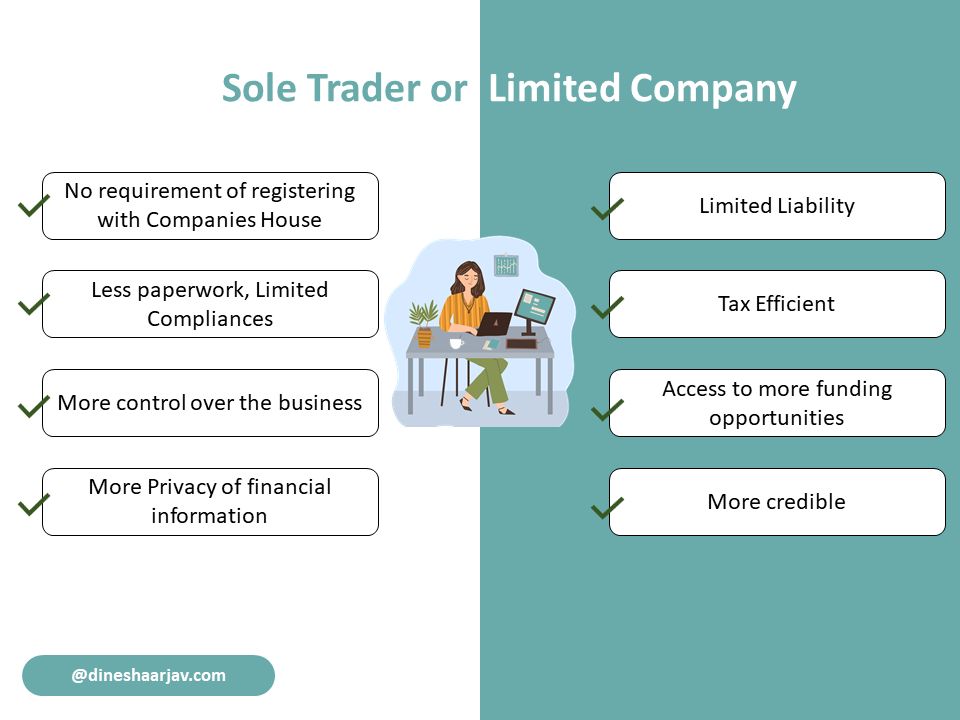
- Simple and easy to set up and operate.
- Full control over the business decisions and profits.
- Lower administrative and compliance requirements compared to a limited company.
- Disadvantages:
- Unlimited personal liability, putting personal assets at risk.
- Limited access to financing and potential growth opportunities.
- Perception of being less established or credible compared to a limited company.
Tax Implications for Expats Choosing Between Sole Trader and Limited Company, UK Sole Trader vs Limited Company for Expats
When it comes to tax implications, expats need to consider the following:
- Sole Trader:
- Profits are taxed as part of the individual’s personal income.
- Expats may need to navigate international tax treaties and regulations.
- Potential for higher tax rates compared to a limited company.
- Limited Company:
- Ability to optimize tax efficiencies through salary and dividends.
- Corporation tax rates may be more favorable than personal income tax rates.
- Compliance with UK tax laws and regulations is essential.
Legal Requirements and Compliance
When setting up and operating as a sole trader in the UK as an expat, there are specific legal requirements that need to be followed. These requirements are different from those of a limited company and it’s essential to understand them.
Legal Requirements for Sole Traders in the UK
- Register with HM Revenue & Customs (HMRC) for self-assessment.
- Keep accurate financial records of income and expenses.
- Submit annual tax returns and pay income tax and National Insurance contributions.
- Comply with UK VAT regulations if annual turnover exceeds the VAT threshold.
Compliance Obligations for Limited Companies vs Sole Traders for Expats
- Limited companies have more complex compliance obligations compared to sole traders, including filing annual accounts, maintaining statutory registers, and holding regular board meetings.
- Sole traders have less administrative burden but must still comply with tax and VAT regulations.
- Both structures need to adhere to UK employment laws if hiring staff.
Specific Regulations for Expats Choosing Between Sole Trader or Limited Company Structure in the UK
- Expats need to consider their residency status and potential tax implications when choosing between a sole trader or limited company.
- There are restrictions on some professions for sole traders, so expats need to ensure they can legally operate in their chosen field.
- Expats may need to appoint a UK resident as a director for a limited company, depending on the structure chosen.
Liability and Risk Management
When it comes to operating as a sole trader or a limited company in the UK, understanding liability and risk management is crucial for expats looking to establish their businesses.
Liability Differences
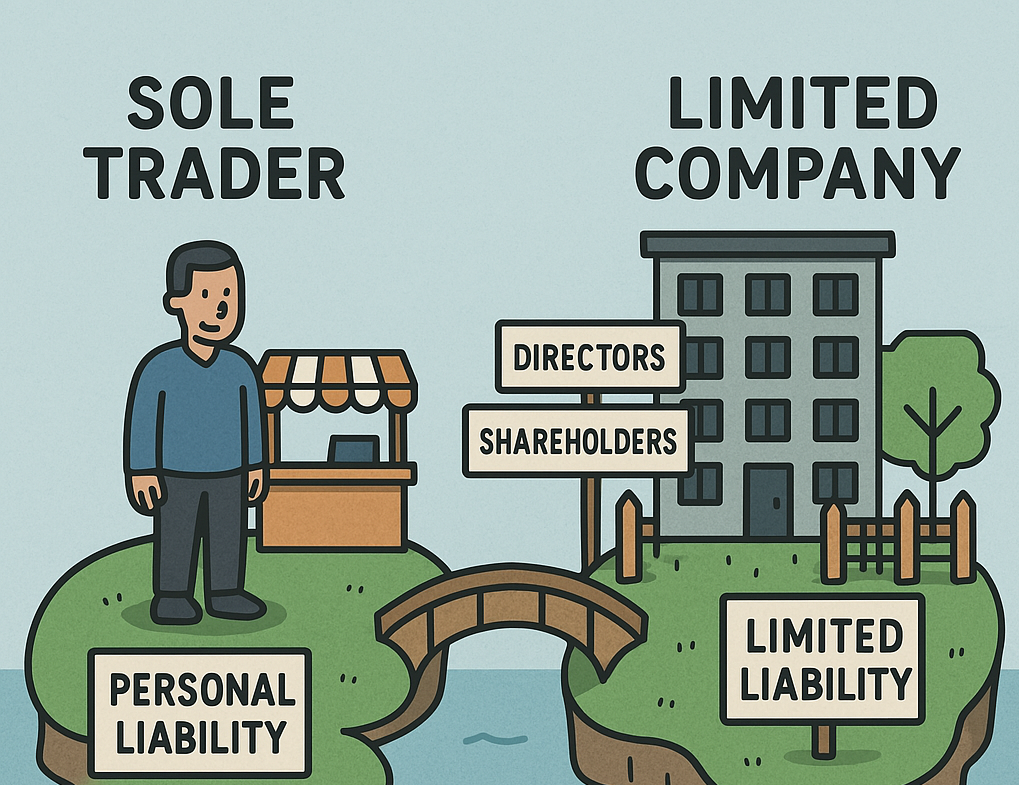
For expats operating as a sole trader, they have unlimited liability, meaning they are personally responsible for any debts or legal claims against the business. On the other hand, expats who choose to form a limited company benefit from limited liability, where their personal assets are protected, and they are only liable up to the amount they have invested in the company.
Risk Management Strategies
- For expats operating as a sole trader, it is essential to consider insurance policies such as public liability insurance to protect against legal claims and financial losses.
- Expats running a limited company can mitigate risks by ensuring proper corporate governance practices, maintaining accurate financial records, and separating personal and business finances.
Protection of Personal Assets
- As a sole trader, expats risk losing personal assets such as savings, property, or investments in the event of business failure or legal issues.
- In a limited company structure, the personal assets of expats are safeguarded as they are considered separate entities from the business, providing a layer of protection in case of financial difficulties or legal disputes.
Growth Potential and Scalability
When considering the growth potential and scalability of a business, expats in the UK must carefully evaluate the advantages and limitations of operating as a sole trader compared to a limited company.
Growth Potential of Sole Trader vs Limited Company
- A sole trader business structure may offer more flexibility and autonomy for expats, allowing for quicker decision-making and easier adaptation to market changes.
- However, a limited company often has higher growth potential due to its ability to attract external investment, access to more financing options, and enhanced credibility in the eyes of clients and partners.
- Limited companies can also benefit from tax advantages and opportunities for reinvesting profits back into the business, leading to faster expansion and growth.
Scalability Factors to Consider
- Expats need to consider the scalability of their business when choosing between a sole trader and a limited company structure.
- Factors such as the ability to hire employees, expand operations, enter new markets, and handle increased workload should be carefully evaluated.
- Limited companies have a higher scalability potential as they can easily bring in new shareholders, appoint directors, and delegate responsibilities for efficient growth.
Impact on Expansion Opportunities
- The business structure, whether as a sole trader or limited company, can significantly impact the expansion opportunities for expats in the UK.
- Limited companies have a better chance of expanding internationally, forming partnerships, and taking on larger projects due to their established legal framework and corporate structure.
- Sole traders may face limitations in terms of scalability and expansion, especially when it comes to securing funding, attracting investors, and competing with larger companies in the market.
Final Review: UK Sole Trader Vs Limited Company For Expats
In conclusion, the comparison between UK Sole Trader and Limited Company for expats reveals the intricate balance of advantages, disadvantages, and regulatory implications that can significantly impact their business decisions in the UK market.
Detailed FAQs
What are the tax implications for expats choosing between a sole trader and a limited company in the UK?
The tax implications vary based on the business structure chosen, with sole traders having different tax obligations compared to limited companies. It’s crucial for expats to consider these implications carefully before making a decision.
How do liability and risk management differ between a sole trader and a limited company for expats in the UK?
Liability and risk management strategies differ significantly between sole traders and limited companies, impacting how personal assets are protected and the level of financial risk involved in each structure. Expats should assess these factors to make informed choices.
What growth potential and scalability factors should expats consider when choosing between a sole trader and a limited company in the UK?
The growth potential and scalability of a business can vary based on its structure, with sole traders having different growth trajectories compared to limited companies. Expats need to evaluate these factors to align with their long-term business goals.
